

Vinyl Flooring Cost Guide: Budget Planning for Commercial Projects in 2026
Every commercial flooring project starts with the same uncomfortable question: what is this actually going to cost? The answer rarely fits on a single line. Vinyl flooring budgets fail not because the material is expensive, but because the number quoted at the start bears little resemblance to the number paid at the end.
Across commercial projects we see a consistent pattern. Material cost is the figure everyone negotiates. Installation labor, subfloor preparation, moisture mitigation, and lifecycle maintenance are the figures that quietly reshape the budget six months later. At UltraSurfaceFloor, we supply commercial-grade vinyl flooring to contractors, distributors, and project specifiers, and the most common source of budget pain we encounter is not product price. It is an incomplete estimate.
This guide breaks down a commercial vinyl flooring budget line by line: what each component costs, which variables move the number most, where lifecycle cost diverges from purchase cost, and how to build an estimate that holds up from bid to closeout.

What Actually Drives Vinyl Flooring Project Costs
Four levers control roughly ninety percent of variation in commercial vinyl flooring budgets. Understanding them makes any quote easier to interrogate.
- Product specification: Core construction (VCT, sheet, glue-down LVT, SPC, homogeneous) and wear layer thickness set the material floor and ceiling. This is the single largest swing factor.
- Installation method: Glue-down, loose-lay, and click-lock carry materially different labor rates and preparation demands.
- Subfloor condition: A flat, dry, clean slab adds little. A slab needing moisture mitigation and full-room leveling can add more than the flooring itself.
- Scale and schedule: Volume drives unit price down; after-hours work and compressed timelines drive it sharply up.
Quotes that look cheap almost always differ from quotes that look expensive on one or more of these four levers, not on the price of a plank.
Material Costs by Product Type: VCT, Sheet Vinyl, LVT, SPC, and Homogeneous
Material pricing varies by a factor of three across the commercial vinyl category. The table below reflects typical United States market ranges for commercial-grade products.
| Product Type | Material Cost (per sq ft) | Installed Cost (per sq ft) | Typical Commercial Use |
|---|---|---|---|
| VCT (vinyl composition tile) | $1.00 – $3.00 | $3.00 – $6.00 | Utility spaces, back-of-house, institutional corridors |
| Commercial sheet vinyl | $2.00 – $5.00 | $4.00 – $9.00 | Healthcare, education, wet areas, seamless requirements |
| Glue-down LVT | $3.00 – $7.00 | $6.00 – $12.00 | Retail, offices, hospitality, high rolling-load zones |
| SPC rigid core | $3.50 – $7.00 | $5.50 – $11.00 | Multi-family, offices, uneven or humid substrates |
| Homogeneous vinyl | $3.00 – $8.00 | $6.00 – $14.00 | Hospitals, laboratories, chemically aggressive environments |
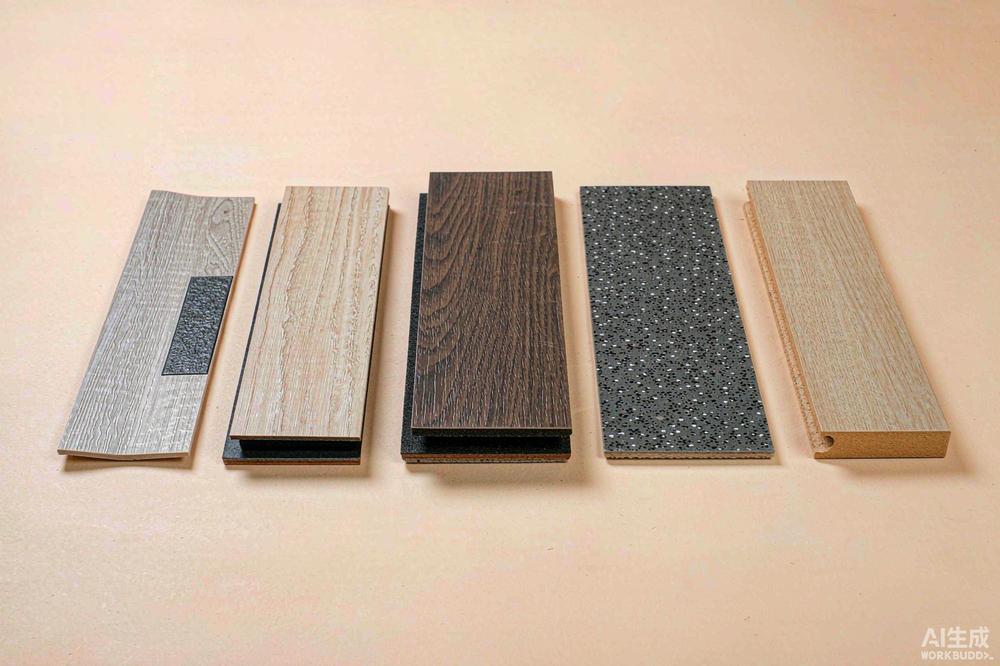
The installed figures above assume subfloor preparation, adhesive, and standard trim work within the stated range. They are the right level of detail for early-stage budgeting. For firm bids, always request project-level pricing rather than catalog or retail SKU pricing, because volume terms on commercial quantities are negotiated, not published.
Two practical observations. First, the gap between material cost and installed cost widens as the product becomes more installation-sensitive, which is why the cheapest material rarely produces the cheapest project. Second, sheet vinyl and VCT occupy the low end of the material range but carry higher lifetime maintenance obligations, a point covered in the lifecycle section below.
Wear Layer Thickness: The Specification That Moves Your Budget Most
Within any given product family, wear layer thickness is the specification that most directly sets price. The wear layer is the transparent film above the printed design that absorbs abrasion, and it is measured in mils (thousandths of an inch) or in millimeters.
| Wear Layer | Metric Equivalent | Material Cost (per sq ft) | Commercial Classification |
|---|---|---|---|
| 6 mil | 0.15 mm | $2.00 – $4.00 | Residential only — not specified for commercial spaces |
| 12 mil | 0.30 mm | $3.00 – $6.00 | Light commercial: private offices, boutiques, guestrooms |
| 20 mil | 0.50 mm | $5.00 – $9.00 | Standard commercial: open offices, corridors, reception |
| 28 mil | 0.70 mm | $6.00 – $10.00 | Heavy commercial: retail, healthcare, education, hospitality |
| 40 mil and above | 1.00 mm+ | $7.00 – $11.00+ | Extreme traffic: transit hubs, big-box retail, industrial showrooms |
Under-specifying the wear layer is the most expensive mistake available in commercial vinyl flooring. A 12 mil product carrying heavy caster traffic will show through to the design layer years before its warranty term expires, and the resulting replacement cost lands entirely outside the original budget. Over-specifying carries its own penalty: a 40 mil product in a lightly trafficked back office is capital that never produces a return.
Match the wear layer to the traffic the space will actually receive, not to the traffic it receives on opening day. Entrances, elevator lobbies, service corridors, and any route that sees carts or casters warrant the next tier up.
The Complete Quote Breakdown: Seven Line Items to Budget For
A commercial vinyl flooring quote is rarely a single number. It is a stack of line items, and the fastest way to compare two bids is to confirm they contain the same items.
| Cost Component | Low (per sq ft) | Average (per sq ft) | High (per sq ft) | Notes |
|---|---|---|---|---|
| Materials (vinyl product) | $2.50 | $5.00 | $9.00 | Driven by construction type and wear layer |
| Installation labor | $2.50 | $4.50 | $6.50 | Includes adhesive, layout, and standard trim |
| Subfloor preparation | $0.50 | $1.50 | $3.00 | Leveling, patching, grinding, priming |
| Moisture mitigation | $0.00 | $1.00 | $3.00+ | Zero only when testing confirms compliance |
| Removal of existing flooring | $0.50 | $1.00 | $2.00 | Higher for glued-down VCT or carpet |
| Delivery and waste disposal | $0.15 | $0.45 | $1.10 | Handling, haul-away, container fees |
| Permits and inspections | $0 | $0.50 | $2.00 | Jurisdiction dependent; may be per project |
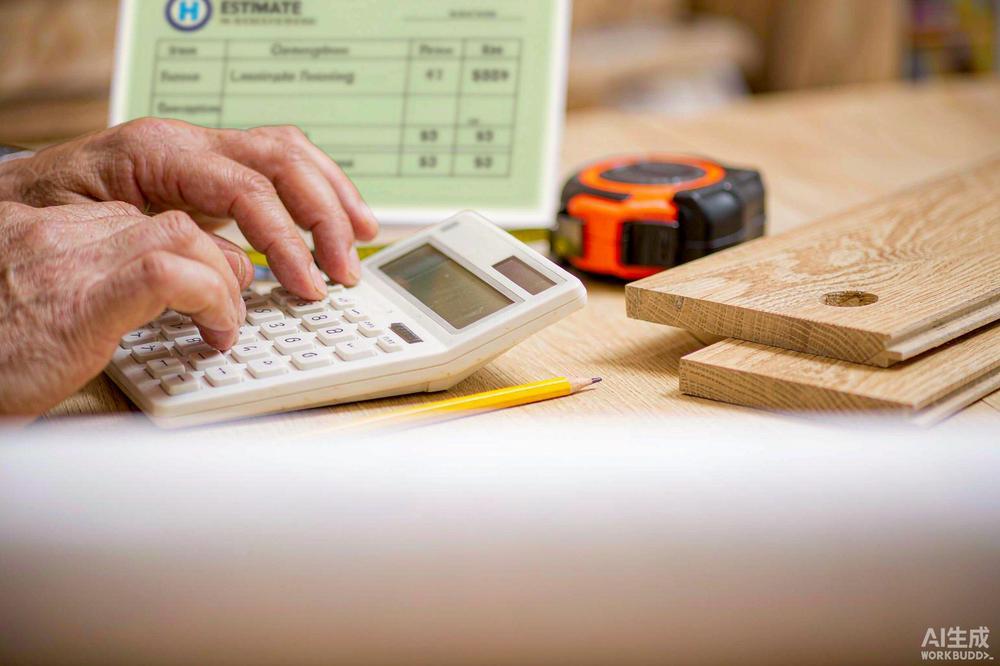
Summed at the average column, these components produce a realistic mid-range expectation of roughly $3.50 to $8.50 per square foot for a commercial vinyl installation, with complex projects in occupied buildings exceeding that band. A bid that omits subfloor preparation, moisture mitigation, or disposal is not a lower bid. It is an incomplete bid, and the difference reappears later as a change order.
Installation Labor and Method: Glue-Down vs Loose-Lay vs Click-Lock
Labor is the second largest line in any commercial budget, and the installation method drives it directly.
| Installation Method | Labor Cost (per sq ft) | Best Suited To | Budget Consideration |
|---|---|---|---|
| Glue-down (full-spread adhesive) | $1.50 – $4.00 | Rolling loads, heavy traffic, healthcare, retail | Highest labor, lowest long-term movement risk |
| Loose-lay | $1.00 – $2.50 | Fast-turnaround fit-outs, replaceable tile zones | Mid-range labor, easier future tile replacement |
| Floating click-lock | $1.00 – $3.00 | Smaller or light-commercial spaces | Faster installation, greater risk under rolling loads |
| Heat-welded sheet | $2.50 – $5.00 | Hospitals, laboratories, wet or sterile environments | Highest labor, delivers a seamless waterproof membrane |
The practical budget rule is straightforward. Where carts, beds, chairs, and pallet jacks will roll, glue-down labor is not an optional upgrade; it is the specification that prevents a premature failure. Where the space is light-traffic and speed of turnover dominates the decision, click-lock or loose-lay can reduce labor meaningfully without functional penalty.
Two labor variables deserve explicit budget lines. Pattern complexity adds cost quickly: herringbone, chevron, and bordered layouts increase cutting, waste, and layout time, and should be priced separately rather than absorbed into a square-foot rate. After-hours and weekend installation, common in occupied retail and office environments, typically commands a twenty to fifty percent labor premium. That premium is real, predictable, and best disclosed to the client early.
Subfloor Preparation and Moisture Mitigation: The Line Most Budgets Underestimate
No line item causes more budget disruption than subfloor preparation. In commercial work it is also the line most frequently estimated from a visual walkthrough rather than from test data.
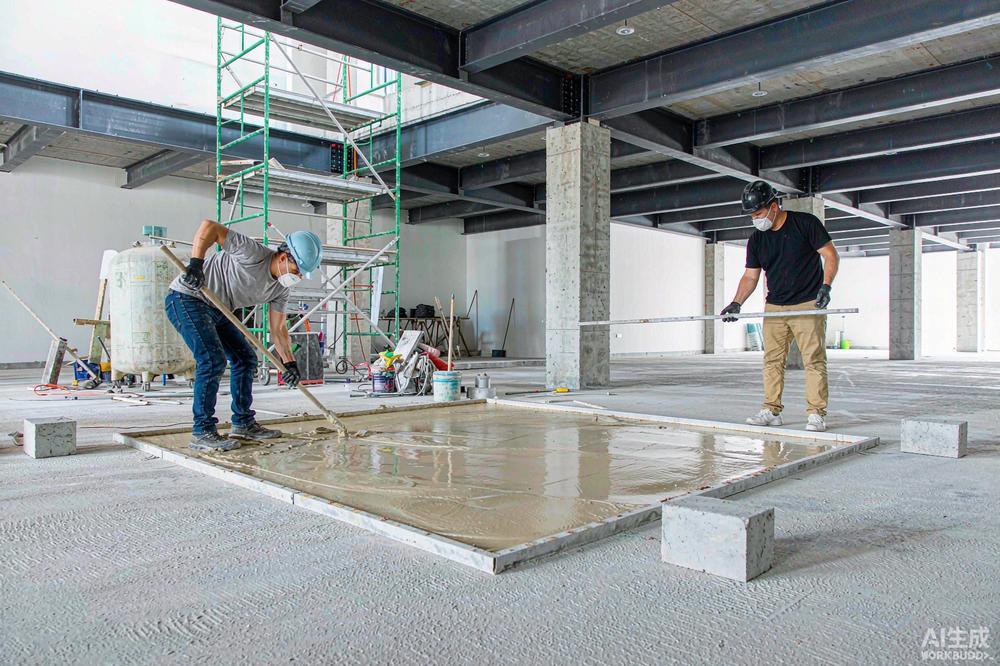
Standard commercial expectations break down as follows:
- Self-leveling underlayment: $1.00 to $3.00 per square foot where the slab falls outside flatness tolerance (typically 3/16 inch over a 10-foot span per relevant standards).
- Moisture mitigation coating: $1.00 to $3.00+ per square foot where in-situ relative humidity testing (ASTM F2170) or calcium chloride testing (ASTM F1869) exceeds the adhesive manufacturer's threshold.
- Grinding, patching, and profiling: Variable, but routinely required to remove adhesive residue, curing compounds, and surface contamination.
- Moisture testing itself: A small cost relative to the project, and the only defensible basis for either waiving or budgeting mitigation.
Moisture is the leading cause of commercial vinyl flooring failure, and it is also the most predictable. A slab that tests within limits costs nothing extra to install over. A slab that tests high requires mitigation before installation, because no adhesive specification can compensate for a substrate that is actively releasing vapor. Skipping the test does not remove the cost; it moves it from a budgeted line item to an unbudgeted warranty claim.
Budget a contingency for subfloor work as a matter of course. Projects that discover moisture or flatness issues after the material is ordered typically absorb a twenty to forty percent increase in preparation cost under schedule pressure, which is the most expensive way to buy the same work.
Hidden Costs That Derail Commercial Flooring Budgets
Beyond the seven standard line items, several costs appear late enough to damage a budget that was otherwise sound.
- Schedule compression: Expedited material production and accelerated installation carry premiums. Standard factory lead time on commercial orders typically runs twenty to thirty working days; compressing it costs money.
- Access and logistics: Upper floors without freight elevators, restricted loading windows, occupied buildings, and long carries from dock to install area all add mobilization and handling cost.
- Cutting waste: Standard plank in rectangular rooms carries roughly seven percent waste. Wide plank raises this to about ten percent, and diagonal or patterned layouts reach twelve percent or more. Underestimating waste forces a mid-project reorder, sometimes from a different production batch.
- Attic stock of the wrong size: Ordering insufficient spare material is a hidden cost. Attic stock is the cheapest insurance available on any commercial floor, and running short later risks a shade variation against the installed field.
- Adhesive and accessory overspend: Trowels wear out and must be replaced on a schedule; under-transfer of adhesive creates hollow spots that generate callbacks long after the project closes.
- Furniture and fixture coordination: Moving, protecting, and reinstalling casework, fixtures, and systems is frequently omitted from flooring budgets and frequently unavoidable.
- Site protection during cure: Glue-down installations require traffic restrictions for a minimum of twenty-four hours and rolling-load restrictions for forty-eight to seventy-two hours. Building that downtime into the schedule is a cost, but ignoring it is a larger one.
A well-built commercial budget carries a contingency line. Five to ten percent of installed flooring cost is a reasonable allowance on projects where the substrate has not been tested, and a smaller figure where it has.
How Project Size, Region, and Schedule Shift the Number
Unit price is not constant across project sizes. Commercial pricing improves with volume because setup, mobilization, and equipment costs amortize across more square footage.
| Project Size | Typical Installed Range (per sq ft) | Character |
|---|---|---|
| 1,000 – 3,000 sq ft | $3.50 – $6.50 | Single-area fit-out, limited volume leverage |
| 3,000 – 8,000 sq ft | $4.50 – $7.50 | Mid-size commercial interior, moderate complexity |
| 10,000 – 20,000+ sq ft | $3.50 – $6.00 | Large multi-area install, best unit economics |
Regional labor markets shift the same scope by ten to thirty percent between metropolitan areas, independent of material cost. Schedule introduces a third variable: daytime work in an unoccupied shell is the least expensive condition, while phased night work in an operating facility is the most expensive.
The budgeting implication is that a per-square-foot benchmark is a starting point, not an answer. Two projects of identical size in identical products can differ by half on labor and preparation alone.
Total Cost of Ownership: Why the Cheapest Bid Usually Costs the Most
Purchase price and cost of ownership are different numbers, and in commercial flooring they can point in opposite directions. The relevant comparison for any specification decision is not what the floor costs to install, but what it costs to install, maintain, and replace across its service life.
Published lifecycle analyses of commercial flooring make the divergence clear. Consider a thirty-year comparison between VCT and commercial LVT, expressed as cumulative cost per square foot including installation and ongoing maintenance:
| Year | VCT — Cumulative Cost per sq ft | Commercial LVT — Cumulative Cost per sq ft |
|---|---|---|
| Year 1 (installed) | $3.14 | $6.00 |
| Year 5 | $9.89 | $10.65 |
| Year 10 | $16.64 | $15.30 |
| Year 20 | $30.14 | $24.60 |
| Year 30 | $43.64 | $33.90 |
The mechanics behind the table are simple. VCT installs at roughly half the upfront cost of commercial LVT, but requires regular stripping, waxing, and burnishing to maintain appearance and protect the porous surface. In heavy-traffic environments that cycle repeats four to six times per year. LVT installs higher and then requires only dust mopping and periodic damp mopping with a neutral cleaner, because it carries a factory-applied protective coating and needs no topical finish.
Annualized across the commercial flooring category, the pattern holds:
| Material | Installed Cost (per sq ft) | Service Life (years) | Lifecycle Cost (per sq ft per year) |
|---|---|---|---|
| Commercial LVT | $5 – $16 | 15 – 25 | $0.25 – $0.75 |
| VCT | $3 – $6 | 15 – 20 | $1.50 – $2.50 in maintenance alone |
| Carpet tile | $3.50 – $9 | 7 – 15 | $0.40 – $0.85 |
| Epoxy | $4 – $18 | 10 – 20 | $0.25 – $1.20 |
| Polished concrete | $3 – $18 | 25 – 30 | $0.10 – $0.55 |
The budgeting lesson is not that LVT always wins. It is that the maintenance obligation must be priced into the decision at bid stage rather than discovered in the operating budget three years later. A facility with an existing in-house janitorial crew and equipment may find VCT genuinely economical. A facility contracting out its floor care will usually find the maintenance differential erases VCT's upfront advantage well before the floor reaches mid-life.
LVT vs VCT: Finding the Real Crossover Point
The crossover between the two systems is the most useful single figure in commercial flooring budgeting, because it converts an abstract lifecycle argument into a date.
Take a 2,000 square foot space as a working example. VCT installs in the range of $4,000 to $8,000. Commercial glue-down LVT installs in the range of $10,000 to $20,000, reflecting both higher material cost and the subfloor preparation and adhesive that glue-down requires.
Over a ten-year horizon, VCT's stripping, waxing, and burnishing labor adds roughly $10,000 to $30,000 to that same 2,000 square feet, while LVT's damp-mopping and occasional machine scrubbing costs a small fraction of it. The cumulative lines cross within approximately three to six years, depending on traffic and local labor rates.
After the crossover, the gap compounds. The practical implication for budget planning is that the evaluation horizon should be stated explicitly in the specification. A three-year leasehold improvement and a twenty-year owner-occupied facility are not choosing between the same two products, even when the square footage and the design intent are identical.
Procurement Strategy: How to Buy Smarter in 2026
On the supply side of the budget, purchasing discipline produces savings that require no compromise on specification.
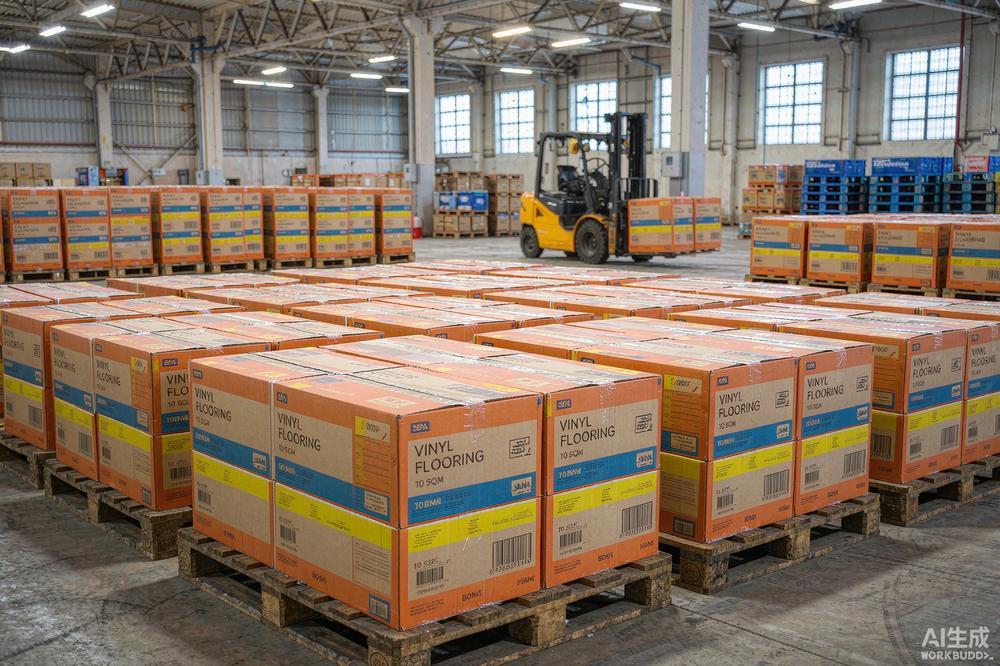
- Quote by the pallet, not the carton. On identical product, pallet-level pricing typically runs ten to eighteen percent below carton pricing. On commercial volumes, the difference is significant and usually available on request.
- Understand container economics. Full-container quantities change both unit price and logistics cost materially. A standard 40-foot high-cube container holds roughly 3,300 square meters of typical plank product, and suppliers quote aggressively at that threshold.
- Plan lead time deliberately. Standard production lead time on commercial orders runs twenty to thirty working days, plus transit. Cutting it close to the installation date converts a supply cost into an expediting cost.
- Approve a golden sample. Lock wear layer, core type, dimensions, bevel, and finish in a signed specification and a retained physical sample before production. This is the control that prevents batch-to-batch variation from becoming a project dispute.
- Verify, do not assume. Request third-party pre-shipment inspection against an agreed sampling standard, and confirm certifications (FloorScore or equivalent for low VOC emissions, ASTM F1700 for solid vinyl tile performance) apply to the specific product being shipped.
- Buy the whole project at once. Splitting orders across production batches is a common and avoidable source of shade variation in large open areas.
Volume leverage is real, but it is secondary to specification control. A slightly better unit price on a product that does not meet the traffic requirement is not a saving; it is a future replacement budget.
Building Your Budget: A Worked 5,000 sq ft Example
Applying the components above to a representative mid-size project clarifies how the lines combine. Assume a 5,000 square foot open commercial interior, concrete slab, glue-down commercial LVT at 20 mil, existing carpet to be removed, and standard daytime access.
| Line Item | Basis | Low Estimate | High Estimate |
|---|---|---|---|
| Materials (commercial LVT, 20 mil) | 5,000 sq ft | $15,000 | $35,000 |
| Installation labor (glue-down) | 5,000 sq ft | $7,500 | $20,000 |
| Subfloor preparation | 5,000 sq ft | $2,500 | $15,000 |
| Moisture mitigation (if required) | Contingent on testing | $0 | $15,000 |
| Removal and disposal of existing carpet | 5,000 sq ft | $2,500 | $10,000 |
| Delivery, trim, and accessories | Allowance | $1,000 | $5,000 |
| Contingency (5–10%) | On installed subtotal | $1,400 | $10,000 |
The resulting range demonstrates why a single per-square-foot number is a poor planning instrument. The same 5,000 square feet spans a wide band once substrate condition, removal scope, and mitigation requirements are resolved honestly rather than assumed favorably.
Three sequencing decisions protect the budget. Test the slab before finalizing the specification, so mitigation cost is known rather than hoped for. Confirm removal scope and existing adhesive condition before pricing, because glued-down carpet and VCT are materially more expensive to remove than floating systems. And retain attic stock from the original production batch, because future repairs sourced from a later batch will not match.
Budget Planning Checklist for Specifiers and Contractors
Use this sequence on commercial vinyl flooring projects to keep the estimate defensible from bid through closeout.
- Define traffic zones before specifying product. Map entrances, corridors, and rolling-load routes, then assign wear layer by zone rather than by average.
- Test the substrate before pricing preparation. Confirm ASTM F2170 and ASTM F1869 results against the intended adhesive's published limits.
- Measure flatness with a straightedge. Budget leveling where variation exceeds 3/16 inch over a 10-foot span.
- Price all seven line items. Reject or correct any bid missing preparation, mitigation, removal, or disposal.
- Apply the correct waste factor. Seven percent standard plank, ten percent wide plank, twelve percent or more for diagonal and patterned layouts.
- Confirm the schedule premium. Establish whether work is daytime in an empty shell or night work in an operating facility, and price accordingly.
- State the evaluation horizon. Compare products on lifecycle cost over the intended ownership period, not on purchase price alone.
- Order attic stock. Reserve spare material from the same production batch for future repairs.
A commercial vinyl flooring budget is a model of the whole project, not a price list. The projects that close within budget are the ones where substrate condition, installation method, lifecycle maintenance, and schedule were each estimated as their own line, and where the specification was matched to measured traffic rather than to habit.
At UltraSurfaceFloor, we supply commercial-grade PVC, SPC, and LVT flooring to contractors, distributors, and project specifiers, with wear layer options from 0.30 mm to 0.70 mm, fiberglass-reinforced cores for dimensional stability, and documentation covering ASTM performance standards and low-VOC certification. Our technical team supports specification review, subfloor requirement guidance, and project-level quoting on commercial volumes. For technical data sheets, current pricing on commercial quantities, or specification support on an upcoming project, contact UltraSurfaceFloor.